Listening to Spiritual Seekers. A Modern Church Conversation
October 9, 2026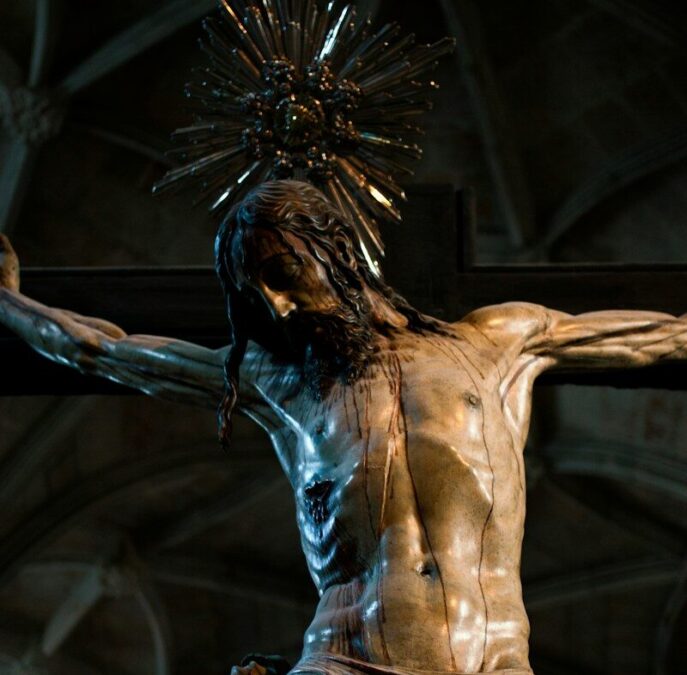
The Body of the Church as Disabled: Lessons from a Crip Christian
By Sorrel Eyres
This blog is an edited version of a Greenbelt talk given by Sorrel as part of the Student Christian Movement’s ‘Young Voices’ session.
The body of the church is disabled. The body of the church is sick. The body of the church is fragmented, broken, distorted, crippled, clinging to an image of its own power that no longer exists.
What do I mean by saying that our church in the UK today is disabled? The Church of England is fragmented, divided over the very legitimacy of the female head; broken, by the threatened schisms over Living in Love and Faith; distorted by Christian nationalism. And before the Anglicans come for me my own denomination, the United Reformed Church, isn’t getting off any easier. The URC has been called the greatest failed experiment in 20th century non-conformism. We wanted to bring together a collection of non-conformist reformed churches as a heterogenous yet unified body. What we have become is yet another drop in the protestant font. The URC is monstrous: bodged together with bits added on and bits missing.
Perhaps that is not such a bad thing. Michel de Montaigne, a 16th century French writer in a country riddled with religious division, wrote an essay entitled ‘The Monstrous Child’. He says that what we see as monstrous is not so to God. Monstrosity is a recurring theme in art and literature through the ages. Disabled bodies, particularly bodies with facial or limb differences, are understood as terrifying and unnatural. Monstrous comes from the Latin monstrare, to show, so I wonder if this is because disabled bodies forcibly show normate society what it is to be confronted with its own mortality. It is in this tradition that calling the body of the church disabled seems insulting. Yet we accept that it is the breaking of Christ’s body that brings salvation. In Christ’s death on the cross, and resurrection, still scarred, we have the physical disabling of a body that is holy. If the church is the outworking of the body of Christ on earth now, perhaps it is disabled by design?
I think the body of the church is a disabled body. I just don’t think that means that the church is doomed. My body is disabled. It has structural issues that in recent years have led to communication breakdown between the head and the hands and feet, internal problems, and even partial dislocation (schism?) of body parts. Sound familiar? This is my body, and I like being alive. Jesus said, this is my body, broken for you. A broken body is still a good body. When I say the church is sick, that is not to say the church is sinful. When I say the church is crippled, that is not to say that the church is cursed. When I say the church is disabled, I mean it is disabled. Acceptance of that is not giving up on the life of the church.
Let me share what the wonderful disabled writer Lucy Webster tells us about the beauty of disabled bodies. They “…are imperfect in the way that all the best things are, which is to say that the imperfections are the whole glorious point. They are needy in the way that all the best things are, which is to say that they force us to recognise that caring for each other is the most fundamental part of being alive and happy at the same time.” I think this love letter to disabled bodies could so easily be writing about all the parts of church that I love the most. The church as disabled body is not a depressing notion for me.
But it is supposed to be uncomfortable; I’m calling on the tradition of the crip killjoy here. As identified in crip theory, the crip killjoy is the physically and politically disabled person who makes the normate population uncomfortable by refusing to fade away. I find myself acting the crip killjoy in the church often, pointing out where church architecture assumes a physically disabled person will never be called to preach or to administer the sacraments. When I talk about the beauty of disabled bodies, my aim is not to comfort with the thought that “oh, being disabled is lovely all the time”, so it isn’t so hard to accept a disabled body of the church. Rather, it is to challenge you to see both us and the church differently.
Radical acceptance of our situation is crucial to sustaining the life of the church. This means acknowledging what is, not fighting against the reality of the body. It means leaving the ‘cure at all costs’ model. For my own body, it means accepting that this is the way I am. Parts of that acceptance have positive outcomes. With the right mobility aids, and accepting that I need care support, I’ve made it to Greenbelt. Parts of it just suck. In July I was supposed to go to Paris for a democracy summer school with the World Student Christian Federation. Due to the climate crisis, the temperatures were over thirty five degrees centigrade, and I had to accept that neither me nor my powerchair were going to be able to operate safely. Non-normate bodies are disabled partly through our interactions with a constantly changing world, making acceptance an ongoing process. If I had pretended that my body could cope with that trip, I’d likely have ended up in hospital and/ or starting a battery fire.
If we pretend that the church is the same as it was a century, or even fifty years ago, we will continue to fail. The attraction model, where we have our services at fixed times in fixed places and assume people will turn up, is clearly poorly adapted to today’s society. According to our own reports, the URC is at tipping point. We have one minister for every five churches. We are trying to work out how to sustain church life in different models. And yet as I go through the discernment and candidating process for the Ministry of Word and Sacraments, it is assumed that I must be called to the prevailing model of traditional pastorate ministry. It is early in the journey to say with any certainty where exactly I am called, but a year of working in chaplaincy means I value ministering as guest rather than as host. I believe I am called to serve people where they are. Some may say, in that case, why are you asking to train for stipendiary ministry? Surely you could be a non-stipendiary, that is, unpaid, minister working in a different job, to meet people where they are? But I think this misses the point. I have great respect for non-stipendiary ministers. I suspect they will hold a large part of the future of our church. But if we’re looking at how best to serve as stipendiary ministers, we need to be open to the probability that the church in twenty years won’t look like the church today. That needs to be embedded at every stage of the process, from discernment through training into how we organise ministers. I’m not going to outline a plan to do that here. There are many better qualified, and besides this isn’t an action plan. But we know we cannot ‘cure’ the church. Training more ministers isn’t going to fix everything even if we could. We must leave the ‘cure at all costs’ model and look at the church body differently. We can’t make everything go back to the way it was, any more than I can make this body of mine able to run and jump. We need to look creatively at where we go from here.
What can crip Christians teach? We’re the experts on how to live in bodies that don’t fit our world. Many of us have experienced a changing body. We know how to deal with things when the status quo stops working. Often this means we’ve been forced to get creative and come up with ways of doing things that don’t occur to most people. Even the way we do church can change. At my church in Oxford, I can’t get up to the lectern. I worried this meant I couldn’t preach. Yet it suits my preaching style perfectly. I settle my wheelchair at the front before the steps, and communicate the message with immediacy and closeness. Different ways of doing church can be exciting and creative, not just a doom-filled response to shrinking congregations. Other disabled people have developed online church. People who are housebound or bedbound create communities of worship and mutual support that look completely different to how we expect church to look. If we accept only in-person attendance in rigid pews as the ‘correct’ way to do church, we miss out on so much beauty. Disabled people create, adapt, change and we simply cannot stagnate. Neither can the church. We must welcome creativity, to accept that the body of the church is battered and broken and ill-fitting with its environment and yet to love it anyway. And because we love it, we help it to adapt.
The body of the church is disabled. Disabled bodies are beautiful. Christ said, “This is my body, broken for you”.
Sorrel Christian Eyres is a multiply disabled Christian who cut their theological teeth in the Trans* Theology Group of the Student Christian Movement. He is always grateful for TTG’s impetus to think differently.