
Announcing Professor Helen King, Modern Church President
September 7, 2026
Signs of the Times Autumn 2026
October 9, 2026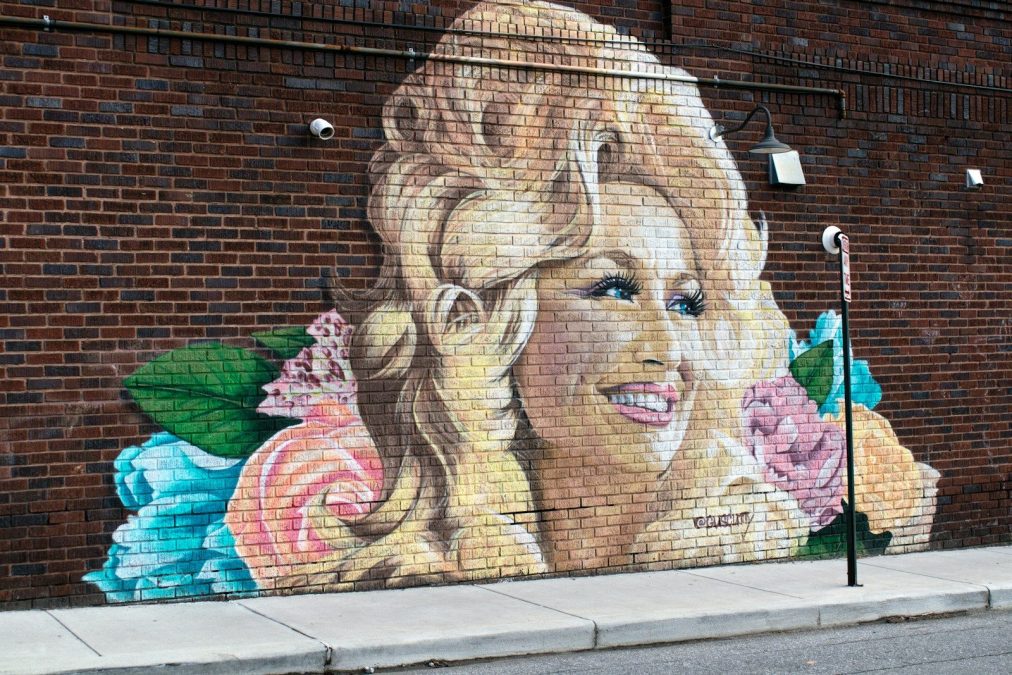
By Joanna Collicutt
Back in 2014 I had the privilege of attending a Dolly Parton concert in Cardiff. At the time I was working on a book on character formation based on some of the courses I taught at Ripon College Cuddesdon, so perhaps it was natural for me to reflect on Dolly’s ministry and her priestly character.
In the Church of England selected individuals are ordained to ‘the office and work of a priest’ but there are many more priestly people around. I am not alluding here to the cultic function and status of the church as a whole under the new covenant (1 Peter 2:9), sometimes referred to as ‘the priesthood of all believers’. I’m thinking instead of the essential character of a role that has emerged over the centuries, something that is a fluid meld of the charisms identified in the first Christian communities and pragmatic responses to the social structures within which the church has found itself, that these days is often taken as essentially synonymous with being a clergyperson.
This role, in reality only a part of what ordained priests find themselves doing, is also exercised by the non-ordained who are temperamentally fitted for it or who intentionally cultivate it as part of their own faith journey and the demands of their local community. It has two essential parts: gathering a harmonious community together and continually pointing to Jesus. I see people around me doing this all the time; some go on to seek ordination, many do not. People do it more or less well; to my mind, Dolly did it par excellence.
First of all, she took her vocation deeply seriously as something that really matters. As in many areas of church leadership, especially crafting and leading worship, hers was a performative vocation. and it was delivered with consummate professionalism, all the while presented as relaxed and natural. The dimension of beauty was attended to, with the visual, acoustic, and poetic aspects woven together into a coherent seamless whole.
Dolly had a stage persona but this never came over as fake because she explicitly owned and gloried in it, yet at the same time did not define herself by it. She took delight in drawing attention to her wigs, makeup, and enhanced boobs, always talking of these in playful mode, employing assured self-deprecation with not a hint of shame. In this she was an extraordinarily powerful model of humility, the most important virtue necessary for public ministry and for a healthy life more broadly. She held the seriousness of her calling and her message together with the ability to laugh at herself and the whole business within which she was caught up, including the business of being human. It’s no accident that humour and humility share a common verbal root.
Of course, humour can be cruel, but that was not Dolly’s style. For her it was accompanied by warmth and a generous open hospitable attitude evident in her demeanour, her freely stated views on gender and sexuality, and perhaps above all in her chosen and carefully curated maternal body shape. In an archetypal signal of nurture and comfort she echoed Christ’s ‘comfortable words’ and his chosen image of the mother hen that has been returned to again and again through the tradition:
Christ, my mother,
you gather your chickens under your wings;
this dead chicken of yours puts himself under those wings.
For by your gentleness the badly frightened are comforted,
by your sweet smell the despairing revived,
your warmth gives life to the dead,
your touch justifies sinners.
(from Anselm of Canterbury ‘Prayer of St Paul’)
This is an image of gathering a community, the sort of thing Dolly was rather good at and seems to have continued to be so, even in death. A community needs to feel safe if it is to grow and flourish in harmony, and the personal qualities that communicate this are perceived competence and warmth (of which I’ve already written) together with trustworthiness based on authenticity.
I’ve no idea whether Dolly always told the truth and none of us have access to the private thoughts of others, but she seemed authentic to me. There was a willingness to tell her story of early hardship and continuing sadnesses transparently, unsentimentally, and with a light touch rather than to trade on it. Moreover, her story was recognizable by others; it was, in its different aspects, our story. It was determinedly hopeful, even when it plumbed the depths and formed the basis of lament.
Nevertheless, the characteristic tone was one of joie de vivre, the reception of life as an amazing and generous gift to be appreciated and celebrated by living it to the full. In my current doctoral research I have returned to the insight that the core of the gospel message is not, as we might suppose, love, but life. I rediscovered John Ruskin’s famous maxim ‘There is no wealth but life!’ or in Dolly’s words, ‘Better get to livin.’
Yet the nature of this life is a kenotic outpouring of love, and this was evident in what has been termed Dolly’s ‘philanthropy’, which turns out to be part of that seamless combination of music, lyrics and visual glamour, all arising from the life experiences that shaped her identity. The gifts were not just to individual children from marginalized communities, but to scientific research programmes, and to emerging artists who required nurture and recognition.
The performance, the nurturing, the storytelling, the financial and artistic generosity come from the same place – what Dolly referred to as her authentic heart and voice, and they reflect another key priestly quality: wisdom. Dolly herself saw her core vocation as songwriting, framing deep truths in reflections on the inner life of the emotions and the outer life of relationships. We learn much of our theology through hymnody and we process our lives through the lenses of poetry and song. Dolly provided many resources for this. My favourite is ‘Little sparrow’ and of those she sang but didn’t pen, ‘You can’t make old friends.’
In this sense Dolly was a teacher, not afraid to tell hard truths, though these were confined to the world of interpersonal relationships and general social justice issues. She resolutely avoided straying beyond this into party politics, refusing to be reduced to a mascot of left or right, progressive or traditionalist. We could learn a lot from that.
All of what I’ve written could be understood simply as a description of a particular sort of fine human being. But what ultimately makes Dolly a priestly figure is her repeated pointing towards Jesus. That was what struck me most in her concert performance – he was never far from her lips and, in the best way, she spoke of him as a friend. Even though she’s been described as a ‘hillbilly goddess’, the undoubted fullness of her life never eclipsed the one who gave it to her; it instead manifested him.
Joanna Collicutt is a Supernumerary Fellow at Harris Manchester College, Oxford, an Associate Priest in an Oxfordshire parish, and an Honorary Canon of Christ Church Cathedral.