

Questioning Christianity?
December 3, 2025
Organised Prophets – the Divine and Human Partnership
January 3, 2026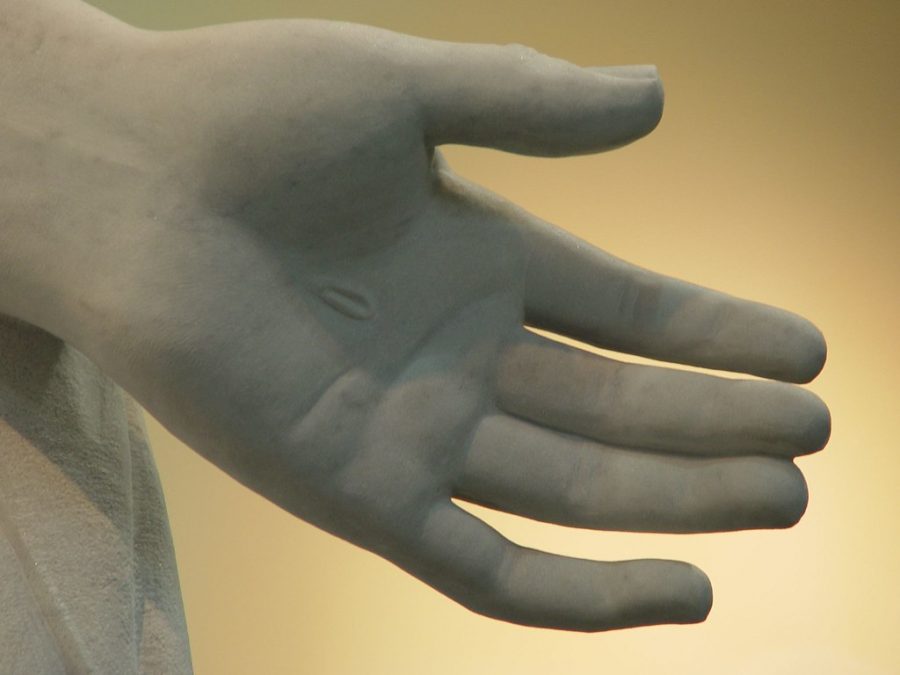
by Anika Goddard
Content warning: this piece includes reflections on themes of suicide and self-harm. Reader discretion is advised.
‘Did Jesus really die for our sins?’, my friend asked me. We were lounging about in what he called the “drawing-room” above the church in London where he worked, lying on the sofas with our feet up. At his question, I considered sitting up straighter, took a gulp of my coffee instead, and prepared for a challenge. We were always discussing this sort of thing. Though my friend was now pursuing the prospect of a career in teaching, for a time we’d both been exploring ordination in the Church of England together.
Did Jesus really die for our sins? My friend was too clever for the dogmatic answer. Instead he was asking the old question of necessity: did Jesus have to? I knew that he had been struggling with his mental health, so I gave him an honest and careful response. I don’t like lowly worm discourse, I said. Let’s put penal substitution on the back-burner. Christ’s death was necessary, sure, because we need the strongest of testimonies to prove to us how loved we are. For God so loved the world… you know it.
I know it, he said. Yeah. But my friend, who read far more theology than me, wouldn’t let me get away with such a convenient answer. We kept talking. Before we could get to the bottom of it, I had to go, making plans as I left to get dinner together with other friends in Cambridge the following Sunday. I remember feeling that I hadn’t risen to the challenge and given a good enough answer, but reassuring myself in the knowledge that there would be plenty more chances for these conversations.
Four days later, on the evening of the seventh of October, my friend took his own life.
All this happened only a few weeks ago. Leaves that now litter byways from London to County Cork, where my friend is from, were then just beginning to curl inwards on their yellowing bellies. To go back further still: in August, I was camping at Greenbelt, an eco-spiritual festival, with my friend and six others. From a bar stool in the Hope and Anchor, a pub tent festooned with fairy lights and portraits of John Wesley on a unicorn, I gave the talk I was originally supposed to write up for this article. The talk was about self-harm scars and survival, and my central text was John 20, in which Thomas, doubting the Resurrection, declares that ‘Except I shall see in his hands the print of the nails […] I will not believe.’ I turned the famous caricature of ‘Doubting Thomas’ on its head, talking instead about his certainty that a resurrected Christ would be a Christ with scars, that a living Christ would bear a beaten-in and still-beating testament to his suffering. The original Greek for ‘print’ is typon, ‘pattern’. What precedent is Christ laying out for us in his scars? There’s the gesture towards imitation; take up your cross. More vitally, however, is the twofold reassurance that Jesus’ scars offer. The first is that scarred bodies are, and can work, miracles. The second is that the entire question of why Christ is resurrected with scars is justified by the proof it presents to Thomas of His love. I think this is what I was trying to get at with my friend in the drawing-room, this proof of love.
Later in my talk, I placed alongside the Gospel of John that great classic of cinema, Kung Fu Panda 2. Near the end of this surprisingly insightful film, our panda hero Po and the evil peacock Lord Shen have a final encounter.
Shen: How did you do it? How did you find peace […] I scarred you for life!
Po: See, that’s the thing, Shen. Scars heal.
Shen: No, they don’t. Wounds heal.
Po: Oh yeah. What do scars do, then? They fade, I guess.
Shen: I don’t care what scars do!
Incapable though he is of recognising its consequences, Shen’s distinction is an astute one. In my early teens, after I stopped self-harming, I hid my scars for years, governed by a taboo so fierce that it enforced itself on the visual as well as the spoken. It is tough to speak about self-harm because the scars are still often perceived as wounds, as objects of shame rather than testaments to a continued survival. After my talk, I was gratified when my friend said to me that he’d found it ‘healing’. I remember that specific word, how well it played on everything I’d spoken about.
What was that, then, friend? A lie? Or – as I thought in the first few days after we’d found out about his death – a cry for help in some wound-up way? Cross-referencing one another, I sat with his other close friends in a succession of pubs. The Granta in Cambridge, the Retro in Westminster after we, with no other place to go, went to his church hoping to find someone no longer here: here, could you guys take a look at these texts he sent me? Did we miss some sign? Did I not know him at all?
Much of friendship is characterised by being in joyful conversation, a conversation that goes on for years through times of soul-closeness and through periods of bad texting and busyness. Setting out on the road of grief, the same waymarkers have begun reappearing to remind me that I am in fact frequently doubling back on myself. One of them is the continual re-realisation that I will never experience the joy of debating with my friend again, because our eternal reunion will take place in a country where there is no more uncertainty. So much of the conversation of friendship is question, drawn up from a bottomless curiosity to discover the trivial and the intricate alike in a friend, unravelling and participating in their story as it becomes part of your own. The profound estranged unknowability of others, I remember reading at university, is fundamentally tragic. At the time I thought this was a dubious claim, and it’s only now that its truth has seeped into the reality of my own life. There were hidden bleak frontiers to my friend that he never allowed any of us to discover, places that, had we known of their existence, we might have been able to fetch him back from.
Where does the reality of this unknowability leave us? Near the end of my talk at Greenbelt, I read the last verse of a poem by Edward Shillito called ‘Jesus of the Scars’.
The other gods were strong, but thou wast weak
They rode, but thou didst stumble to a throne
But to our wounds only God’s wounds can speak
And not a God has wounds, but thou alone.
“If God has a hope of speaking to us, wounded and scarred as we are, then He too needs to know what it means to have scars and wounds, just as only Jesus’ scars, his typon, would convince Thomas to believe. Scars have power to testify to a healing, to give hope that there is a life beyond wounding.” This is how I closed my talk then, and I still believe in that power. But oh, friend – if Christ’s typon are really so healing, why didn’t you allow them to speak to you? Why didn’t you allow yourself to speak to and be known by us, your friends who love you?
Eight of us flew out to County Cork for our friend’s funeral, a beautiful service in a small country church near the Wild Atlantic Way. In the bright Sunday sunrise the day after the funeral, I walked again the half-hour to his grave from the farmhouse where we were staying. I walked alone, singing hymns to the hedges and reciting a poem I’d read so many times before the funeral that it had become embedded in my memory; O Love that will not let me go. I kept misquoting it as O love that will not let me rest. I encountered no one on my way. The churchyard was quiet, open to the sky and sentinelled by trees trembling with birdsong and gently shedding leaves. My friend’s grave had been freshly filled in. Wreaths of flowers were bursting red and white below a little cross where the headstone would be. Even the roots which lay scattered through the displaced earth were very golden in the light. Though the sun was by now well up behind the trees, everything was still the colour of dawn.
It felt like morning in the resurrection garden. Copper-coloured bracken tassling the edges of the churchyard; the green gate left open; and Mary Magdalene waiting, though she doesn’t know it yet, to receive the first Gospel. As I knelt in the grass, I felt like my friend would say my name behind me. I know exactly how he’d say it: always ever so slightly ironic, warm with the traces of a West Cork accent. I think he’d begin it with a ‘but’. ‘But Ani…’ and I’d turn, and we’d pick up where we left off, in the middle of the story, and it would be a story without end.



1 Comment
Thank you so much Reverend Ani. for your ‘sermon’ ; beautiful yet surprising. You speak of our God who loves us so much that He still bears his Crucifixion scars for us in his Resurrected, Glorified Presence in the Loving Community of the Trinity. His blessing is within you this Christmastide.
Tim Jackson