Signs of the Times Spring 2026
February 16, 2026
Who’s disqualified from Theology? A Modern Church Conversation
March 12, 2026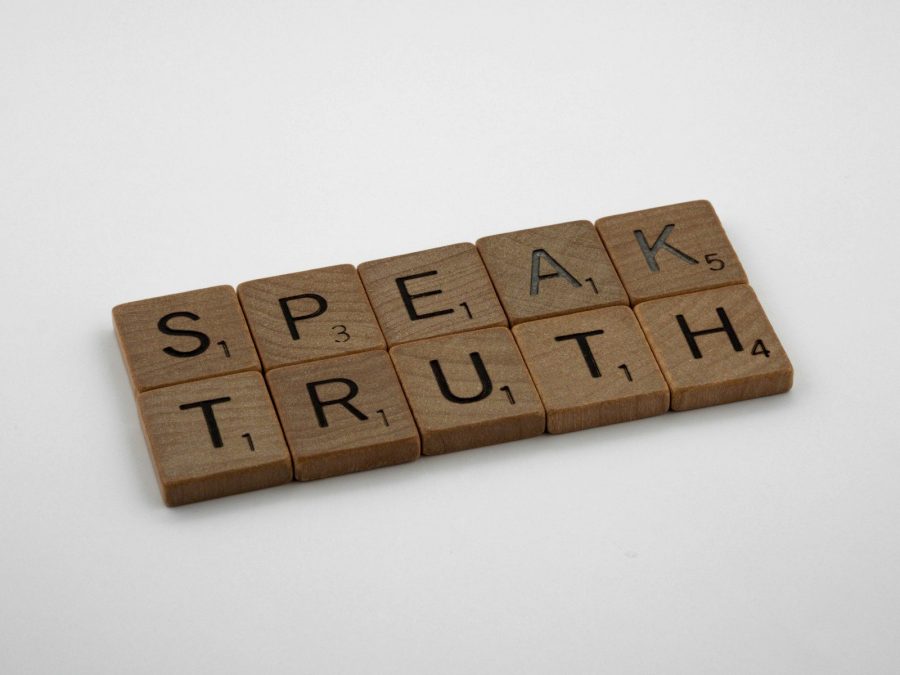
‘Speaking Truth to Power’:
Who Speaks? Whose Truth? Whose Power?
By Elaine Graham
One of the perennial concerns of Modern Church is the nature of the involvement of Christians – individually, collectively and institutionally – in politics. One such channel is through representatives of the churches speaking out on public issues in the belief that those in power should be held to account.
One recent example of this comes in the shape of a sermon delivered in January 2025 by Rt Revd Marrian Edgar Budde, Episcopal Bishop of Washington, on the occasion of the inauguration of the second Donald Trump administration. She issued a passionate plea to the President to show justice and compassion towards the most marginalised in society, such as migrant workers, refugees, children and members of the LGBTQ+ community. She said this:
“Have mercy, Mr. President, on those in our communities whose children fear that their parents will be taken away. Help those who are fleeing war zones and persecution in their own lands to find compassion and welcome here. Our God teaches us that we are to be merciful to the stranger, for we were once strangers in this land.
May God grant us all the strength and courage to honor the dignity of every human being, speak the truth in love, and walk humbly with one another and our God, for the good of all the people of this nation and the world.” (Budde, 2025)
Budde later identified two priorities as lying at the heart of Christian public witness: solidarity with the marginalised and speaking truth to power.
The origin of the term ‘speak truth to power’ is sometimes assumed to date from early Quakerism, but in fact it first found prominence in 1942 in a statement from Bayard Rustin, an African-American Quaker and civil rights campaigner. It was later developed into a pamphlet from the American Friends Service Committee entitled Speak Truth to Power: A Quaker Search for an Alternative to Violence (1955). Speaking truth to power had three constituencies: political leaders, ordinary citizens and the conduct of democratic discourse:
“To those who hold high places in our national life and bear the terrible responsibility of making decisions for war or peace.
To the American people who are the final reservoir of power in this country and whose values and expectations set the limits for those who exercise authority.
To the idea of Power itself, and its impact on Twentieth Century life.” (AFSC, 1955, p. iv)
The ‘truth’ to be proclaimed was “that love endures and overcomes; that hatred destroys; that what is obtained by love is retained, but what is obtained by hatred proves a burden”. These principles derived from the authors’ pacifist convictions but which, they believed, were reflected in the instincts of all people of good will that a reasoned alternative to military force was possible as a way of resolving global conflict (AFSC, 1955, p.v).
For Mariann Budde, her public stance is similarly informed by her faith: by engagement with Scripture, immersion in the rituals and sacraments of the Church and inspired by the example of earlier generations of theologically-inspired civil rights activism and public protest. In her own work she cites figures such as Dietrich Bonhoeffer, Walter Brueggemann, Joan Chittister, Kelly Brown Douglas, Rabbi Edwin Friedman, Martin Luther King Jr., Reinhold Niebuhr, Henri Nouwen and Howard Thurman (Budde, 2023). Nor has she been alone among faith leaders in the U.S. to speak out publicly as the Trump administration has unleashed the full force of State power at home and abroad. Notwithstanding, however, the actions of Federal government continue with seeming impunity. The confrontational approach of ICE agents in arresting immigrants and exercising extreme force against demonstrators in many American cities suggest that Budde’s appeal to the values of human dignity and shared morality exercises little or no influence on government policy and practice. Indeed, if the Trump government is motivated by any moral or religious principles, they are more likely to be those of conservative, patriarchal Christian nationalism.
This might lead us to ask whether ‘speaking truth to power’ is still possible at a time when increasingly it appears that ‘power isn’t listening’! As political discourse and public debate becomes ever more fractious, it becomes harder to imagine any kind of appeal to those in power on the basis of a shared discourse of moral reason. In a religiously plural society, many would not acknowledge the legitimacy of faith-based reasoning in public. While truth-telling may draw attention to injustice and rally support, it may not be enough to challenge entrenched beliefs or overcome well-organized State power. Similarly, the task of ‘speaking truth’, while a significant undertaking, may itself rely on structures of privilege and inequality that are themselves part of the problem. Without structural changes to whose voices are able to access avenues of power, the act of truth-telling itself may reinforce existing power dynamics rather than dismantling them. It’s possible, too, that the AFSC’s faith in the power of truth-telling rested on too optimistic a view of the ability of democratic politics to effect change. Increasingly, it seems as if power rests more in the hands of global corporations (the fossil fuel industry, social media companies and financial institutions) than in democratically-elected officials. How to speak ‘truth to power’ when the means for holding such organisations to account is far from obvious?
The kind of political polarisation we are witnessing in Western democracies and the erosion of any kind of common discourse may therefore require alternative forms of social witness. Many pressure groups (such as those in the US demonstrating against the actions of ICE personnel, or in the UK, campaigning around climate emergency), have reached the conclusion that speaking out must take the form of non-violent direct action. Church leaders may seek to rebuke the powerful, but more effective may be forms of localised direct action which focus more on Budde’s other imperative of social witness alongside those who are most vulnerable. A reminder, perhaps, that the churches’ public theology needs to find expression in deed as well as word.
Elaine Graham is Chair of Trustees of Modern Church.
Notes
American Friends Service Committee, 1955, Speak Truth to Power: a Quaker Search for an Alternative to Violence (revised edition, 2010) online, available at: https://afsc.org/archive/speak-truth-power
Budde, Mariann Edgar, 2023, How We Learn to be Brave: Decisive Moments in Life and Faith, New York: Avery, Penguin, Random House.
Budde, Mariann Edgar, 2025, ‘A Service of Prayer for the Nation” (online), January 21st, available at: https://cathedral.org/sermons/homily-a-service-of-prayer-for-the-nation/